Window Replacement in San Bernardino: Can It Keep Wildfire Smoke and Embers Out?

Replacement windows can help keep wildfire smoke and embers out of a San Bernardino home, but only when the glass is tempered, the frame holds its shape under heat, and the installation seals the gap around the frame. They do not make a house fireproof or ember proof. Windows are one part of hardening a home, alongside vents, roof, gutters, and defensible space.
Why the glass is the first thing to check

Most window failures in a wildfire start with the glass. Radiant heat from burning brush or a nearby structure can crack ordinary annealed glass. Once a pane falls out, embers and flames have an open path into the house.
Tempered glass handles heat far longer than annealed glass. For a home near brush, dual pane units with at least the outer pane tempered are the starting point, and tempering both panes adds more margin. Dual pane alone is not the answer. Two annealed panes can still crack and fall out.
Low-E coatings and tinted glass do not change this. They help with everyday sun and comfort, but they do not help glass survive radiant heat.
How to tell what you have now
Look in one corner of each pane for a small etched or sandblasted mark. Tempered glass carries one. If there is no mark, the pane is usually annealed, and that window moves to the top of the replacement list.
Frame material under heat
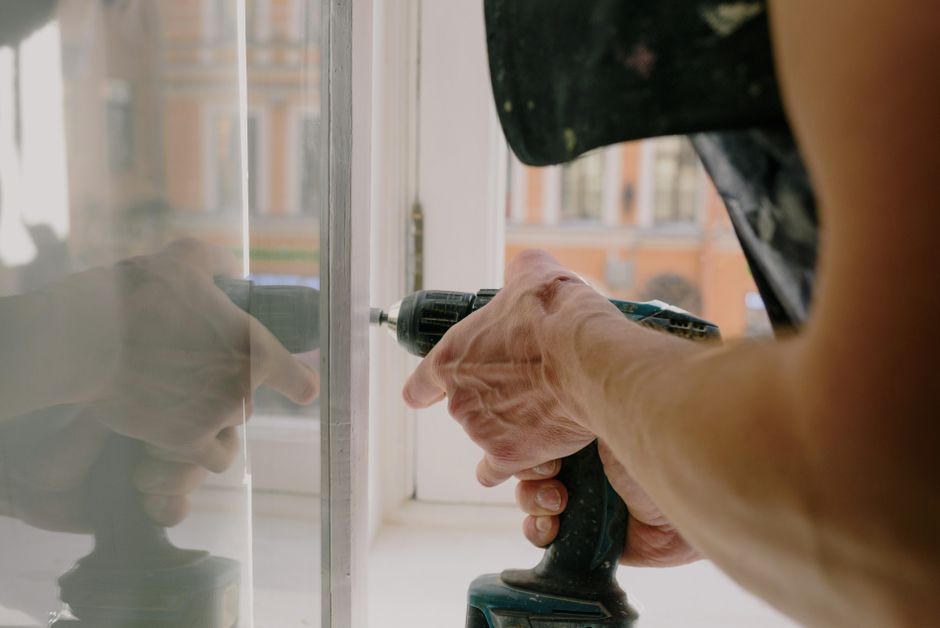
A strong pane still needs a frame that holds it. Standard vinyl can soften and sag in heat, which may let the glass unit drop out of the frame. Aluminum, fiberglass, and metal clad wood frames keep their shape better. Not every vinyl window performs the same as a metal or fiberglass one, so do not treat them as equal.
If vinyl is the choice, ask about metal reinforced frames and for documentation of fire testing.
Ask for paperwork, not slogans
A sales sheet that says "fire safe" proves nothing. Ask the installer for written product documentation showing the unit was tested for wildfire or ember exposure. If the paperwork does not exist, treat the claim as marketing.
Smoke mostly sneaks in around the window
Smoke is a different problem from embers. Much of the smoke that gets in comes through gaps around the frame, not through the glass. A premium window set badly in a leaky opening will still let smoke through.
Correct installation seals the joint between the new frame and the rough opening with low expansion foam or backer rod and sealant on the inside, plus exterior sealant and flashing outside. That layered seal is what keeps fine smoke from being pulled around the unit.
Retrofit inserts or full frame replacement
Many older San Bernardino tract homes have aluminum slider windows. A retrofit insert leaves the old frame in place and fits a new window inside it. That works if the gap between the old and new frames is fully sealed. A full frame replacement lets the installer inspect and repair the rough opening, and it is worth considering where the old frame is bent or the stucco joint around it is cracked.
Leave the weep holes alone
Slider and aluminum frames have weep holes along the bottom that drain water. Do not caulk them shut. Blocked weep holes cause leaks and rot, and they do nothing meaningful against embers. Some products use baffled weep covers that limit wind driven air without stopping drainage, which is a better answer than a bead of caulk.
Operating style changes how tight a window stays
Casement and awning windows press the sash into a compression seal when locked, so they usually leak less air than sliders and single hung windows. Sliders and single hung units rely on brush style pile weatherstrip, which wears and leaks over time.
For rooms where smoke tightness matters most, such as bedrooms, a casement or awning style is a sensible pick. Whatever the style, a window only blocks smoke and embers when it is closed and latched. During any red flag or smoke event, close every window, slider, and skylight and lock them so the sash pulls tight against its seal.
What San Bernardino's wind and terrain change
Santa Ana winds come down through Cajon Pass and across north San Bernardino from the northeast. That wind pressure on the windward walls forces smoke through every small leak and drives embers against glass and frames. Check seals and weatherstripping first on windows facing north and east.
Foothill neighborhoods such as Verdemont, and the area around California State University, San Bernardino, sit close to brush covered slopes. In homes like these, put the strongest glass and frame upgrades on the walls and skylights that face the slopes, and phase the rest of the house in afterward if the project has to be staged.
Skylights
Skylights take direct ember and heat exposure. Plastic dome skylights near brush should be replaced with units that use tempered glass. Keep leaves and debris off the roof around them.
Screens and what sits under the window
Screens catch embers when windows are open and help protect the glass. Choose metal mesh. Fiberglass screens melt and burn.
What sits under a window matters as much as the window itself. Bark mulch, dry shrubs, wood furniture, and wood fences below or beside a window can flare up and put direct flame on the glass. Keep the strip directly under windows clear, using gravel, pavers, or bare soil.
Slider tracks and deep sills also collect leaves, pine needles, and dust that embers can ignite right against the frame. Vacuum tracks and clear sills regularly, especially in late summer and fall.
Yearly upkeep before fire season
Hot dry summers and strong sun dry out and crack rubber and foam seals. Each year before fire season, press along the weatherstripping on every window. It should be soft and continuous. Replace any that is flattened, brittle, or missing.
A quick leak test
On a windy day, close and lock the windows. Slowly move a stick of incense or a lit candle around the sash and frame edges, keeping it away from curtains and blinds. Smoke that wavers or gets pulled in marks the spot where a seal or installation gap needs work.
The leaks that new windows cannot fix
Windows are not the main way embers get into a home. Attic and foundation vents, roof edges, and debris filled gutters are usually bigger entry points, so a window project should not come at the expense of those. Smoke also gets in through doors, vents, ducts, attics, and other gaps, so new windows will not keep all of it out.
A few household habits matter just as much:
- Evaporative coolers. Many older Inland Empire homes still use them, and they pull large volumes of outdoor air inside. Shut them off during smoke events, because even the tightest windows cannot help if the cooler is drawing smoke in.
- Window air conditioners and portable units. Units vented through a window gap bypass the window seal entirely. Seal or remove them, or at least stop them from pulling in outside air when smoke is present.
- Indoor air cleaning. Tight windows slow smoke but do not clean the air. Run a portable HEPA air cleaner in the main living or sleeping room. With central air, set it to recirculate and use the highest rated filter the system can handle.
Cleaning up after ash
After a smoke or ash event, rinse ash off glass and frames with plenty of water, then wipe gently. Dry scrubbing drags abrasive ash across the glass and can scratch it and wear away coatings. Wet ash left sitting on frames and seals can degrade them over time.
A practical order of operations
- Check each pane for the tempered mark and flag any window without one.
- Rank the windows by exposure: slope facing walls and skylights first, then north and east walls that take the Santa Ana wind.
- Choose dual pane units with a tempered outer pane at minimum, in a frame that keeps its shape under heat, and get the fire testing documentation in writing.
- Confirm the installer will seal the frame to the opening inside and out, and will leave the weep holes working.
- Fit metal mesh screens, clear the ground under the windows, and set up a HEPA air cleaner.
Done in that order, replacement windows give a San Bernardino home a real improvement against both smoke and embers, even though they cannot do the whole job alone.